


Introduction
The disclosure of CVE-2026-34040 highlights a class of security failures that are easy to miss.
- Some vulnerabilities generate alerts.
- Some trigger policy violations.
- Others bypass security controls entirely.
This vulnerability falls into the last category.
It does not break container isolation directly. Instead, it bypasses the mechanisms designed to enforce security policies in the first place.
And that distinction matters.
What CVE-2026-34040 Actually Breaks
CVE-2026-34040 affects how Docker Engine (via Moby) enforces authorization.
Docker supports authorization plugins that act as gatekeepers for container operations, enforcing policies such as least privilege and configuration restrictions.
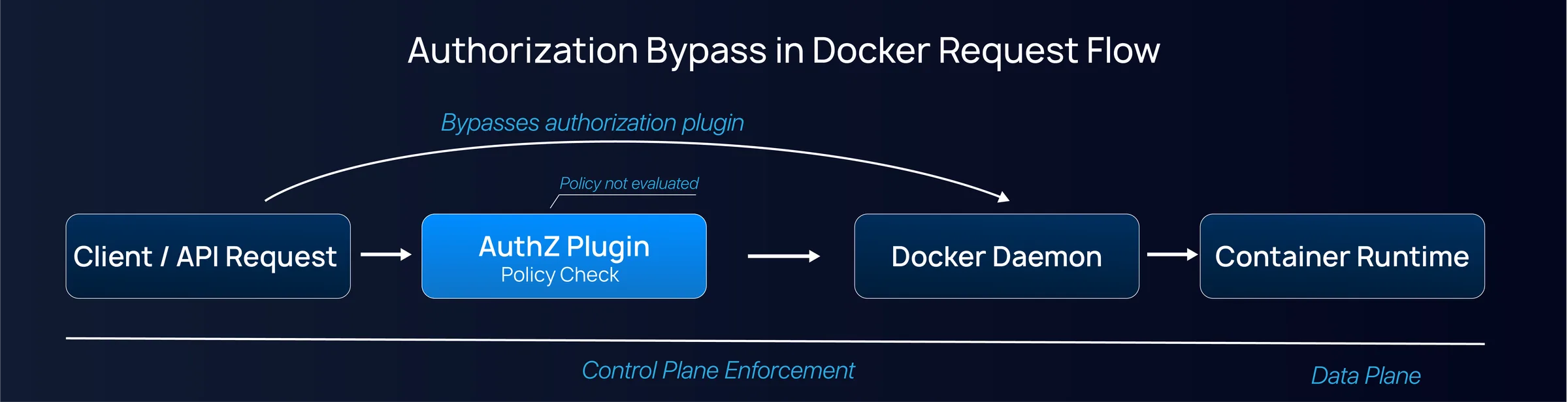
Under certain conditions, specifically when API requests are handled outside the normal authorization plugin invocation path (for example, due to request size or edge-case processing), specially crafted requests can:
- Bypass the authorization plugin chain entirely
- Still be processed by the Docker daemon
- Execute operations that would normally be restricted by policy
The system processes requests without invoking policy enforcement.
This vulnerability is structurally different from typical container issues.
- It occurs in the control plane (API layer)
- Not in the container runtime (data plane)
- And it happens before enforcement is applied
This has two important implications:
- No policy evaluation occurs
- No alert or denial is triggered
If the control plane is bypassed, downstream protections may never apply.
Why This Matters: A Structural Gap in Container Security
CVE-2026-34040 followed a tightly coordinated disclosure cycle:
- Reported on March 24, 2026
- Patched within 24 hours
- Publicly disclosed shortly after
While this reflects strong response practices, it highlights a broader pattern such as when vulnerabilities are fixed quickly; most environments remain exposed due to patching delays and operational lag.
More importantly, the issue exposes a deeper architectural concern.
Authorization enforcement in Docker Engine is implemented as:
- An external plugin layer
- Dependent on request flow
- Not intrinsically enforced within core request validation
This creates a critical weakness:
If the authorization layer is skipped, no enforcement occurs, resulting in an implicit allow condition.
This is not about misconfiguration. It is about assumption failure.
Most container security models rely on:
- Runtime enforcement
- Policy evaluation
- Detection and response
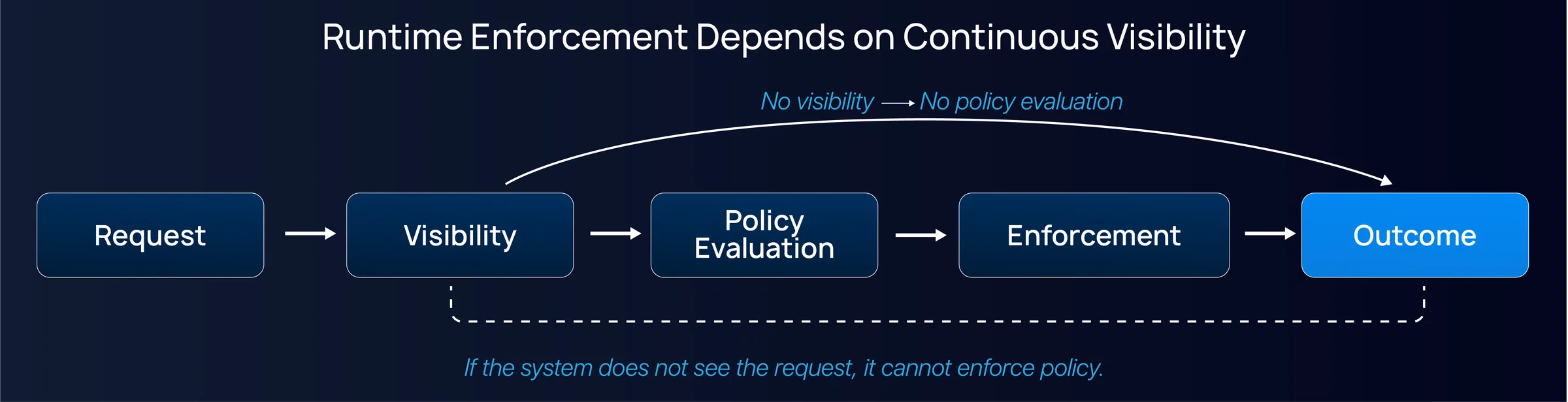
But these depend on whether the enforcement layer is executed.
CVE-2026-34040 shows that this assumption does not always hold.
When Runtime Security Fails, What’s Next?
This class of vulnerability highlights the limits of runtime-dependent security.
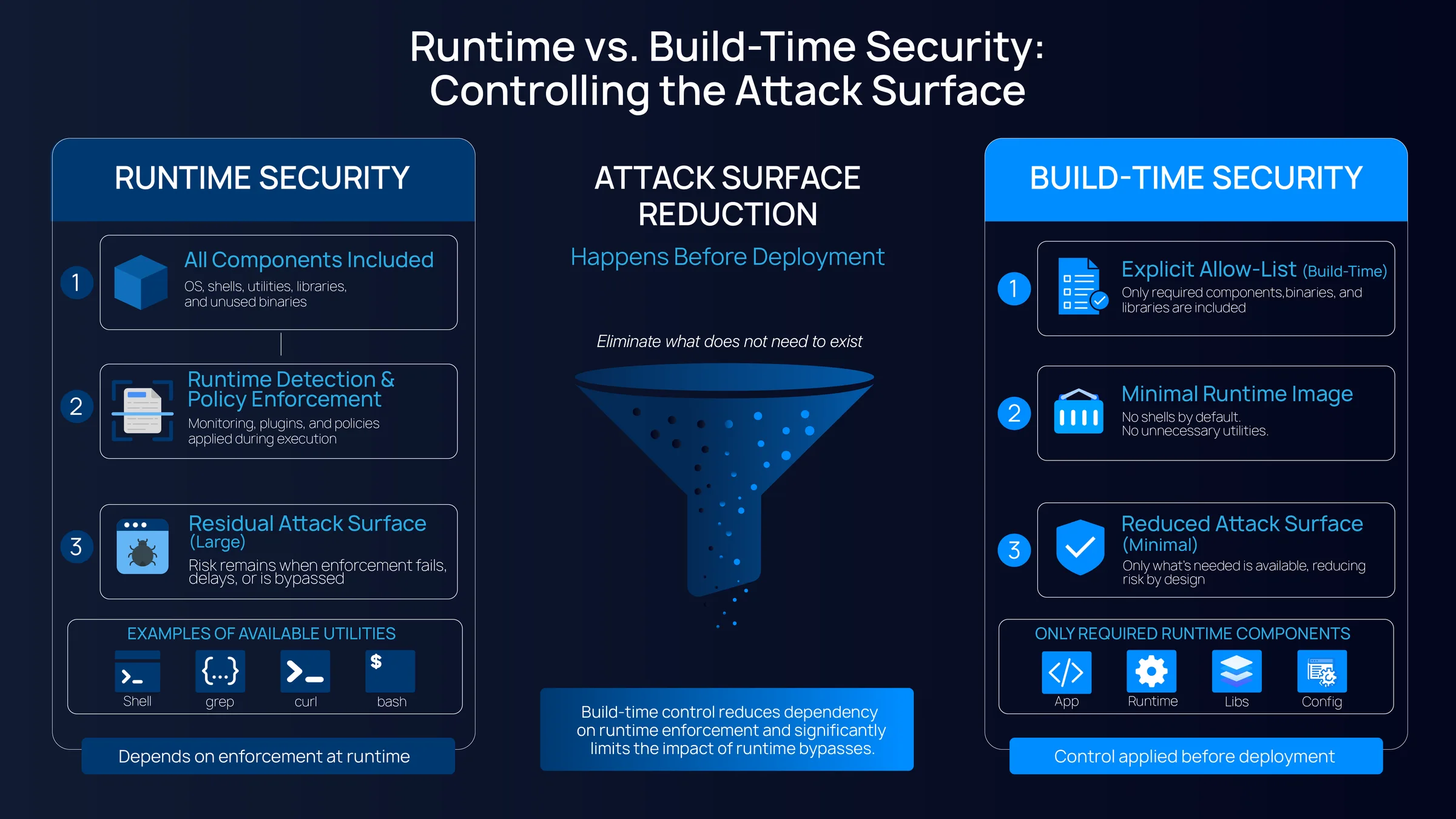
CleanStart takes a different approach by shifting control earlier in the lifecycle. Because if security depends only on runtime enforcement, it is already too late. The system must be constrained before it runs.
Build-time control over runtime behavior
Security is enforced during image creation:
- Only explicitly allowed components are included
- Unnecessary binaries are removed
- Execution paths are tightly scoped
This reduces reliance on:
- Runtime plugins
- API request flows
- External enforcement layers
Attack surface reduction
Even when a container is launched with elevated permissions:
- Minimal executable footprint
- No unnecessary utilities
- No interactive shell by default
The available attack surface is significantly reduced.
Deterministic security posture
Instead of asking - “Will this be blocked at runtime?”
The model becomes - “Can this exist in the runtime environment at all?”
This improves predictability and reduces reliance on dynamic enforcement.
Resilience to runtime bypasses
Authorization bypasses and control plane gaps are not isolated incidents.
A build-time approach helps by:
- Limiting what can be executed
- Reducing exposure even when runtime controls fail
Build-time control reduces dependency on runtime enforcement and limits the impact of runtime bypasses.
Conclusion
CVE-2026-34040 is not just a Docker vulnerability.
It highlights a broader reality:
Security controls that depend on execution paths can be bypassed before they are ever invoked.
As container environments scale, relying solely on:
- Runtime enforcement
- Detection
- Policy evaluation
It introduces an implicit risk. Any security model that assumes enforcement will always execute, is fundamentally fragile by design.
A more resilient approach focuses on:
- Earlier control in the lifecycle
- Reduced attack surface
- Limiting what is possible, not just what is permitted
If your container security model depends on runtime enforcement, it’s time to rethink the foundation. Talk to our security experts to see how a build-time approach reduces exposure.